Share

Share | | More

Monday, September 23, 2013

Crude, by any other name…

Karen Wristen is Living Oceans' Executive Director and leads our Tankers campaign that is focused on keeping Canada's Pacific North Coast tanker-free. 

When I saw the video coverage of the train derailment at Lac-Mégantic, Quebec, horror quickly turned to anger.  As I listened to the fear and awe in the voices of those who escaped, describing “le chaleur…” I was instantly suspicious that this was not an explosion of conventional crude oil. A quick text to a reporter at the scene confirmed my hunch:  it was labelled “crude oil”, but it came from North Dakota. The Bakken oil shale fields in that state are producing something quite unlike the oil that we’ve known for the past century.  In fact, it more closely resembles gasoline in volatility.

Freight train derailment at Lac Mégantic (QC) this summer resulted
in a loss of life and half of the town's centre. 

But what, I wondered, was North Dakota crude of any sort doing on a Canadian train headed to a Canadian refinery? I understood it was law in the US that all crude had to be refined in the country. Looking a little more deeply into the matter, I uncovered an ironic twist in the fate of the oil industry.

When tarsands and oil shale production began to look economically feasible, U.S. refineries began the extensive refitting and reconfiguration needed to deal with heavy, bituminous oils. Anticipating the Keystone XL pipeline would be approved, the plan was to bring those heavy oils to the Gulf refineries.

Two things went wrong with that plan. First, Keystone proved to be one of the most galvanizing issues to sweep the U.S. since the Vietnam war.  Then the Bakken fields proved to be holding, not the expected heavy crude, but quite the opposite: gases and light liquids like the one that exploded that July night in Lac-Mégantic. Opened for permitting purposes as “crude oil” sites, the product of the Bakken fields is reported in U.S. statistics as “crude” and, as we now know, shipped as “crude.” And tragically, it is being shipped in rail cars that were designed for crude and not for the highly explosive product that it is.

The U.S. industrial conundrum becomes extremely pertinent for us in Canada because the product that exploded at Lac-Mégantic is the very thing tarsands producers use to thin the bitumen that they pump through the pipelines that run through our towns and cities. With a ready market for the product just over the border and the only ‘nearby’ refinery being Irving’s in New Brunswick, we can expect to see a lot more of the stuff crossing the border.

In fact, if the Enbridge Northern Gateway proposal is approved and goes ahead, several hundred tankers loaded with the same kind of product will be navigating Douglas Channel every year, bringing condensate to the pipeline for transportation to the tarsands, and back again, mixed with the bitumen. Which leads us to wonder where Kinder Morgan will be getting the condensate they need to move bitumen through the Port of Vancouver.

I know I’ll be approaching all level railway crossings with a new measure of caution.

Wednesday, August 21, 2013

Raft Cove and beyond - further adventures in marine debris

Andrew Mitchell is Living Oceans Society's summer student, working on our Clear the Coast project on Northern Vancouver Island.

Since my last blog post, we've made two more trips out to check up on our collector bags. Last week we visited Raft Cove and Cape Palmerston, while this week we made the long trip out to Hecht Beach. Fortunately, some lovely people have been filling up those bags, giving us plenty of time to relax on the beach (joking). Thank you to all you good Samaritans, and keep up the good work!


Our planned trip to Raft Cove took a bit of an interesting twist (and took on the slightest hint of patchouli) when we learned of the impending World Rainbow Gathering taking place there. Though the park has since been closed, over 1800 people had confirmed their attendance on the event’s Facebook page. Though we didn't quite know what to expect, when we arrived there were about 15 cars in the parking lot and reportedly about 50 people camped out down the beach. Whether it was the Rainbow Gatherers or other park visitors, someone had clearly been picking up some debris. We also had a volunteer with us: Megan Baker from Cetus Research and Education Society, who hooked us up with the Cetus truck to use. We tied off out first full net bag and stored it above the tide line for pickup later. After replacing the bag and checking on the second father down the beach (about half full), we were on our way. We found the bag out at Cape Palmerston nearly full, with some additional bags full of Styrofoam and other debris stacked around it. Between the three of us we replaced the bag and carried the full one out through the short trail.


Last week’s trip to Hecht Beach, though certainly not unpleasant, was also discouraging. It’s unbelievable how much debris we found in a small area of the beach. Worse still, lots of it was Styrofoam, which has an unfortunate tendency to break into smaller and smaller pieces over time. Eventually, a big chunk of Styrofoam that would be simple to pick up becomes a myriad of tiny bits that take far longer to collect. These Styrofoam bits persist in ecosystems for vast amounts of time, release toxins into the marine environment and can be ingested by wildlife.  That’s not to say that Styrofoam is the only harmful thing that washes up. Various types of debris can have different negative impacts, whether ingestion, entanglement, pollution or any of several other problems.


All marine debris can damage ecosystems in various ways, which is, ultimately, the reason it needs to be removed.  On the beach, we focused our collecting energies on a patch of driftwood, where everything from bottles to boots were mixed up between the logs. Just when you thought you’d finished an area, you’d look at it from another angle and see even more debris! Three garbage bags of debris later, we tied up the now-full collector bag and hung up its replacement. By that time, the morning fog had burned off, and we could finally get a good look at how beautiful the beach is- a quintessential west coast landscape of rock beaches, sparkling blue water and endless trees. That alone made the trip worthwhile, and I look forward to going out there sometime without carrying a garbage bag around the whole time!


While little pieces of Styrofoam are a problem, so are other kinds of (much larger) debris. To date, two small Japanese boats have been spotted washed up on shore. These too could release toxins into the ecosystem and could also crush habitats.  The first, which was spotted back in January, is just north of Cape Palmerston, while the other boat, which was spotted quite recently, is west of San Jo Bay. Both of these sightings were found thanks to our Clear the Coast partners at West Coast Helicopters, and were reported on Living Oceans’ Clear the Coast map. The map is the place where reports are posted from anyone who tells us about marine debris they've seen- be it a washed up vessel, some ghost fishing gear, or general items. Everyone is encouraged to contribute, as the map will help give a clear picture where debris is accumulating and (hopefully) where people are helping to clean it up. All you need to do is fill out a form with the details (where, when, etc.) and we’ll upload that information onto the map.


In summary, we now have more than 3 bags worth of garbage collected- and keep in mind these are much larger than a garbage bag! One net bag could easily hold 10 full regular sized bags and still have room left over for some Styrofoam.  Thanks again to the people out there helping us help the oceans. Don’t forget to report anything you find via our website so we can form an accurate picture of the problem and help formulate better solutions. Be sure to check out what’s on the map so far, and hopefully the next time you do, it will be updated with more firsthand accounts from others. Keep up the good work, and keep pitching in against marine debris.

Thursday, August 1, 2013

Summer cleaning on Northern Vancouver Island

Andrew Mitchell is Living Oceans Society's summer student, working on our Clear the Coast project on Northern Vancouver Island.

The first thing I always look at when walking out onto a beach is the ocean. Whether or not there is anything to be seen other than a huge expanse of water, the sound of waves crashing and the smell in the air immediately draw my attention. After that, I take in other details: the sand (or lack thereof), the plants and animals, and more often than not, the garbage. Even in places that seem to be just barely touched by humans, you can find the usual suspects, be it cans and bottles, Styrofoam or the ever-present plastic.

While some of said garbage is the work of local beach users, much of it also comes from the ocean. This “marine debris”- essentially any made-made object that ends up in the ocean- washes ashore over time. Aside from ruining a day at the beach, marine debris is also a serious threat to ecosystems in and outside of the ocean. The problem is too huge for any one person or group to tackle, which is why we need your help.

Marine debris near Cape Palmerston on northern Vancouver Island, BC


Tuesday, July 2, 2013

Silent videos of remarkable marine life

Working in the marine conservation world in Canada these days can be very discouraging, you get up, go to work, spend your days in the office (if you don't work in the field), and go home with the hope that something you did made a difference. It can be easy to forget sometimes why you do what you do, unless you spend time watching the natural world.
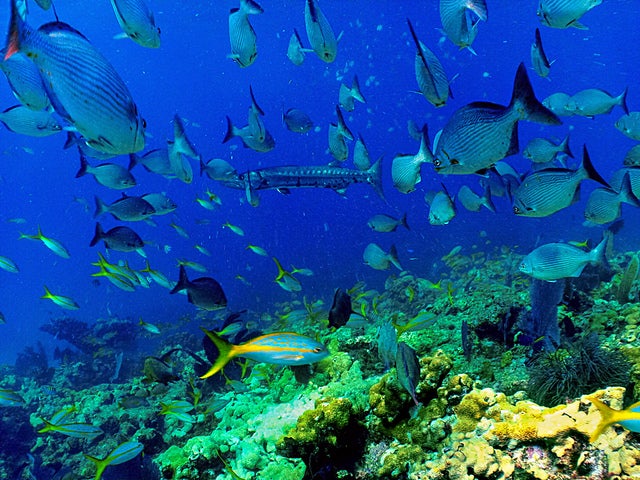
Every single day there are amazing things happening in, around and under the ocean, even as we sort out our recycling and try to decide what to make for dinner. Here are a few examples in my favorite medium: silent film.

Even as you were lying in bed this morning, contemplating the pros and cons of hitting the snooze button again, thousands of rhinoceros auklets were flying home with beaks full of pacific sand lance to feed to their chicks who will soon fledge. Some of these birds make an 80 km round trip in a night to find food in the rich waters around the Scott Islands and other colonies along the coast. This is their story:


Tuesday, May 28, 2013

Putting a value on nature

I've harped on about the value of the natural world in previous posts. I recently came across a TED talk that really pins down not only the value of nature's services, but also the hidden costs of their use to society. But I'll let the gentleman in question, Pavan Sukhdev, speak for himself. Enjoy:

Wednesday, May 8, 2013

The Business of Marine Reserves: Achieving Financially Sustainable Ocean Conservation

Rod Fujita is Director of Research and Development, Oceans Program, with the Environmental Defense Fund. This piece was originally published on May 1 on the Environmental Defense Fund blog.

Ocean conservationists have been arguing for a long time that marine reserves are a good investment, because they help sustain many ecosystem services, including fisheries and tourism. Various studies have helped to quantify the value generated by marine reserves, but a new study puts it all together and presents a convincing value proposition for marine reserves. Now all we need are investors who can appreciate that value proposition and make it work economically, and the right combination of rules and governance that will make these new kinds of markets – ecomarkets – viable.

Thursday, April 25, 2013

Meet the Chefs!

Lana Gunnlaugson is the National Manager for SeaChoice.

On Friday, May 3rd, 12 top chefs are coming to Vancouver to join forces in support of making National Sustainable Seafood Day official in Canada. Each chef is preparing a unique “Best Choice” seafood culinary creation that is not to be missed. Trust me, I've seen the line-up of dishes and my mouth is already watering! And not only will chefs be attending, but the fishers and aquaculture producers will be there to share their seafood solution stories for our oceans. And the icing on the cake will be hearing our keynote speakers, David Suzuki and Chef Barton Seaver.

The chefs involved with this event are key ocean ambassadors that have the power to influence not only their restaurant's menu and customers, but as celebrity chefs they influence food lovers and communities at large across the nation. We hope you will be able to join us for this special seafood celebration to toast these amazing chefs for making the commitment to serve ocean-friendly menus and keep our oceans healthy for today and tomorrow. Oh, and definitely take 2 seconds to sign your name to the petition in support of National Sustainable Seafood Day.

Friday, April 19, 2013

Little bird in a big ocean

In the black hours of early morning, a tiny bird emerges from its shallow burrow on the top of a wind-swept rocky island and launches itself out over the wild Pacific Ocean. This female Cassin's auklet is not much to look at – barely larger than a robin and considerably less colourful, with only a tiny white eyebrow as a marking. She has been described as a 'flying tennis ball', built more for diving than for flying, but she has a long way to go to find food for her chick. While her mate rests for the day, she takes her turn at flying out to the edge of the deep water, a one-way trip of up to 100 km. It will be dark again before she returns from her exhausting flight with food for her young safely tuck away in a special pouch in her throat.

Monday, March 25, 2013

Canada must do more to protect coastal waters from increasing industrialization

The following article appeared in the Vancouver Sun on Monday, March 25, 2013 and can be viewed in its original context here. Art Sterritt is executive director of Coastal First Nations; Michael Uehara is president and CEO of the King Pacific Lodge.

This is a story of failure, opportunity and the path to redemption in managing Canada's oceans.

The federal government has failed to honour commitments dating back to the 1997 Oceans Act to protect Canada's natural marine heritage. And this neglect is endangering not only our ocean ecosystems but also sustainable jobs and prosperity on all three coasts, now and for generations to come.


Wednesday, March 20, 2013

Giant squid - one big happy species!

It is not our custom on here on Water Blogged to feature widely popular marine species. Most of our previous posts about specific creatures have focused on the lesser-known/appreciated ocean-dwellers like hagfish, sculpins and sleeper sharks. My colleague, Carrie, once wrote an excellent piece on the truly under-appreciated eelgrass. However, today's news is so exciting that it warranted a post about a creature that has captured the imagination of humans around the world for centuries.

A recent genetic study of preserved specimens of giant squid from around the world suggests that these animals are not only a single species, but in fact a single global population!

The Kraken as Seen by the Eye of Imagination by Edward Etherington

Monday, March 18, 2013

Harper government’s muzzling of scientists a mark of shame for Canada

The following commentary appeared in the Toronto Star on Friday, February 15, 2013. It can be viewed in its original context here. Jeffrey Hutchings is Killam Professor in the Faculty of Science at Dalhousie University and the president of the Canadian Society for Ecology and Evolution.

“In my view, scientists should stick to science.”

This was a Conservative MP's response to my testimony at a 2012 parliamentary committee after I'd chaired a Royal Society of Canada expert panel on how climate change, fisheries, and aquaculture affect Canadian ocean biodiversity. Among other things, our report concluded that constructive and respectful debate on salmon aquaculture is hindered by a lack of full disclosure of diseases on fish farms, a concern echoed by Justice Bruce Cohen in his October 2012 report on Fraser River sockeye salmon.

I was making the point that science plays a key role in informing, strengthening, and assessing the effectiveness of science-based management practices and government policy. Judging from his unsolicited advice that I should “stick to science,” Manitoba MP and committee member Robert Sopuck didn't see things this way.

Perhaps scientists should be seen, but not always heard. This would be consistent with a recent tightening of the near-Gordian communications knot that controls how federal scientists interact with society .

Monday, March 11, 2013

Douglas Adams: Sifting Through the Embers

Today is significant for at least a couple of reasons that I know of. Firstly it's the 2nd anniversary of the 2011 earthquake and tsunami that devastated coastal Japan and washed whole cities into the Pacific Ocean. This tragic milestone was marked by an episode on the Fifth Estate titled Second Wave, which is well worth watching.

The second reason that this date stands out in my mind is because it's the 61st birthday of the great science fiction writer Douglas Adams. Aside from being known for his humorous work, International Towel Day and the number 42, Adams was a passionate environmentalist which led him to do such things as climbing Mount Kilimanjaro dressed as a rhinoceros.


He also co-authored a book (and accompanying radio series) with zoologist Mark Carwardine titled Last Chance to See, in which he traveled around the world to catch a last glimpse of the last remaining members of a few prominent endangered species. The book included a heart-wrenching description of the authors' search for the last few baiji (Yangtze River dolphins) which are now one of the few marine mammals to become functionally extinct in modern times.

The book ends with the following passage, which is one of the best analogies for the global loss of biodiversity and the exponentially increasing cost of conservation that results from our idleness. These species and the conservation world as a whole lost a great champion with Adam's passing.

Tuesday, February 19, 2013

"What the hell were you thinking?" A 16-year-old's testimony at Enbridge Northern Gateway JRP

The following article originally appeared in the Vancouver Observer on February 5th, 2013, and can be viewed in it's original context here


What the hell were you thinking? from Catherine Wallace on Vimeo.

The following transcript is from the presentation of Sam Harrison, who presented at the Northern Gateway Joint Review Panel in Vancouver on January 31.

Thursday, February 14, 2013

Love in the Sea

This being Valentine's Day and all, I thought I'd share some cool stories and videos I've run across recently about love in the sea. And by 'love' I mean of course to say 'sex'.

It all started with a story about the Sex Lives of Barnacles from Discovery News. Barnacles, really? How exciting could that be? Well for one, they have the largest penis relative to their body size! But even more exciting, scientists recently confirmed that intertidal gooseneck barnacles (Pollicipes polymerus to their friends) capture sperm directly from the water. Up until now, it was thought that all crustaceans copulated directly in some way.

On the left: A stalked barnacle with a relaxed penis (marked with arrow); On the right: Erect barnacles releasing sperm into water. Image:courtesy of Discovery.com

Wednesday, February 13, 2013

Death, Taxes and MPA's

With March fast approaching, many of you are probably thinking about the latter of life's two certainties. That's right, the days are getting longer, the flowers are poking through the snow and accountants are sharpening their pencils in preparation for tax season. It's time to dig out your receipts, take stock of your finances and prey that you won't be audited when it's all over.

Audit. The word alone is often enough to raise the blood pressure, especially if you've ever been involved in one. But audits are really an essential part of any financial accountability be it personal, business or government. In fact, there is a whole department within the Canadian government whose business it is to hold the administration accountable for its stewardship of public funds - the Office of the Auditor General.

This past Tuesday, the Commissioner of the Environment and Sustainable Development (who is responsible for audits that relate to environmental issues) released a report on a number of topics including Canada's Marine Protected Areas (MPAs) and how the federal government is living up to its commitments around them. The release of this report included a short video that does a great job of explaining the issue in about 3 minutes:


Thursday, February 7, 2013

The lowly limpet and the need for full habitat protection

Will Soltau is Sustainable Fisheries and Salmon Farming Campaign Manager for Living Oceans Society.

I started out to write an Overlooked Species Theater piece about the lowly limpet. But as it unfolded, it became more about overlooked habitat.


The recent re-write of the habitat provisions in our Fisheries Act have been bugging me a lot lately. And I'm not the only one. Justice Cohen took a swipe at the federal government in his report on declining returns of sockeye salmon to the Fraser River. And just the other day the Environment Commissioner wrote, “The Department (of Fisheries and Oceans) has stated that it has not yet fully determined the impact of the changes.” My heartburn comes partly because the changes to habitat protection were wrapped up in an Omnibus Budget Bill and crammed down our collective throats. But it's also because the kind of thinking that only values economic determinants is really short sighted and doesn't make any ecological sense.

Thursday, January 24, 2013

Public Interest: a statement to the Joint Review Panel

Statement to the Joint Review Panel: Kim Wright, January 16th, 2013 in Vancouver B.C.

My name is Kim Wright. I was born in Prince Rupert and I live and work in Vancouver. I have spent my whole life on the coast. I am an environmental and social scientists, educated and employed in the field of environmental conflict analysis and management.

Tonight I wish to speak to you about what is in the public interest and how one might approach making that determination

My personal perspective is informed by many years of working with Canadians who come together to make decisions about the natural resources they share. I have witnessed the positive benefits of collaboration and stakeholder engagement in marine and land use planning. There are many examples from across Canada where sustainable resource use that is compatible with the needs and values of local communities and the environment has resulted from such processes. They are critical for establishing the public interest for current and future generations of Canadians.

I have also been witness to changes in British Columbia's coastal communities over the last forty years; the industrialization of the fishing fleet, boom and bust local economies, declining opportunities for employment and the movement of youth away from their families and home towns into the cities for education and work. I am sympathetic to the need for economic opportunities for all Canadians including those in smaller coastal communities. My friends and colleagues in these communities will all agree that stronger more diverse economic opportunities that are embedded in healthy ecosystems are the long term solution. They believe and I agree that these are their interests.


The National Energy Board defines the public interest as:
inclusive of all Canadians and refers to a balance of economic, environmental and social considerations that changes as society's values and preferences evolve over time. 

Monday, January 21, 2013

Incidental catch: in the wrong place at the wrong time

Will Soltau is Sustainable Fisheries and Salmon Farming Campaign Manager for Living Oceans Society.

A while back I blogged about the outbreaks of the IHN virus at salmon feedlots in BC and how they may have been avoidable if a vaccine was used. As it turns out, 2012 was a bad year for disease outbreaks in the Canadian salmon feedlots on both west and east coasts. A lot of money was invested with no return. More money was spent culling fish under depopulation orders from the Canadian Food Inspection Agency. On top of that, Chile rebounded after their three year ISA epidemic and began re-supplying the market, driving prices down and squeezing margins in B.C. And when you add on the cost of a million dollar BC ad campaign with a high rent agency just before and during the downturn, a better example of throwing good money after bad would be hard to find. It's no wonder the salmon aquaculture spin doctors are so snarky these days.

What just recently came to light is the incidental catch associated with one of those disease events. 2.5 tonnes of Pacific herring that were unfortunate enough to be in the wrong place at the wrong time were sucked out of the net pens along with the sick Atlantic salmon. "*The incidental catch of herring at this facility occurred during a planned depopulation to control the spread of Infectious Haematopoietic Necrosis virus (IHNv)."

Thursday, December 20, 2012

Evolving Technology Closes in on a More Sustainably Farmed Salmon

Kimberly Irwin is an intern with SeaChoice and Kelly Roebuck is Living Oceans Society's Sustainable Seafood Campaign Manager.

Take a look back 20 years and it is amazing how far we have come in the way of technology – from brick sized analog cell phones to digital smart phones being just one example of many. Industries typically evolve to become more sustainable, relevant and efficient overtime. Aquaculture should be no exception. Yet the majority of salmon farming is still done the same way as it was 20 years ago, in open net-cages that are in direct contact with the marine environment and wild salmon. SeaChoice deems open net-cage farmed salmon to be an ‘Avoid’ due to this farming method's environmental impacts. But what if salmon farming technology evolved? Well savvy innovators are closing in!

Rural West Virginia may seem like an unlikely location for an internationally renowned research facility and salmon aquaculture, but there sits The Conservation Fund’s Freshwater Institute (TCFFI) nestled on 100 acres of farm land. The institute opened its doors in 1987 in the hopes of solving some of the most pressing issues related to the management and efficient use of freshwater resources.

Tuesday, November 27, 2012

Canadian ocean economies at risk from GHG emissions

The following piece was written by Rashid Sumaila, Director of the UBC Fisheries Centre & Fisheries Economics Research Unit, and originally appeared on the WWF Canada Blog here.

Canada is blessed with the longest coastline in the world and one of the largest ocean estates of any country. Ocean fish stocks are among the planet's most important renewable natural resources.

Beyond playing a crucial role in marine ecosystems, fish support human well-being through employment in fishing, processing, and retail services, as well as food security for many coastal regions. Gross revenues from ocean fisheries worldwide are estimated at about US$85 billion annually, generating economic and household income impacts throughout the world economy of about US$240 billion and US$63 billion annually. The equivalent numbers for Canada are US$2.8 billion, US$9.1 billion and US$2.9 billion. In addition to these commercial values, fish is a good source of protein, micro-nutrients, minerals and essential fatty acids, and globally provides 3 billion people up to 15 per cent of their dietary animal protein needs. In Canada, many coastal communities, especially First Nations groups, rely heavily on fish for food and employment, in addition to their cultural and ceremonial importance.

Ensuring that our oceans and fish stocks are healthy and sustainable long-term is important to the Canadian and global economy and identity. Achieving healthy oceans has always been difficult, as they are plagued by the historical problems of overfishing, pollution, and habitat destruction and loss. Global warming, ocean acidification and deoxygenating are new threats. Combined with the longstanding threats, these new issues are creating formidable challenges to this important animal protein source, and the economics of the businesses and communities that depend on them. As amply demonstrated by the collapse of northern cod off Newfoundland, the depletion of fish stocks can have devastating effects on human well-being.


Friday, November 16, 2012

The best laid plans in the absence of planning

Update: after an overwhelming response from coastal residents and others and discussion with local marine conservation groups, the proponent of the tidal project has withdrawn their application. See this post from the Orca Lab blog for details.

I have always been a big fan of tidal power. The BC coast has great potential for all sorts of 'alternative' power with its high winds relentless waves, and all of those narrow passages that can provide over 12 knots of current twice daily (as was the case in Seymour Narrows the last couple of days). Even when the winds are calm and the waves low, the tidal exchange still reliably generates substantial quantities of energy with relatively little impact.

So if someone told me that there was going to be a tidal generator development in my neck of the woods, I'd be all over it right? Well as it turns out, there is a feasibility study for tidal energy being conducted right now, less than twenty miles from where I'm sitting. The only problem is that the location is in of the worst possible from a marine conservation standpoint.

Location of the proposed tidal power project site in Blackney Pass, B.C.

Thursday, October 25, 2012

Ghosts on the Coast

Will Soltau is Sustainable Fisheries and Salmon Farming Campaign Manager for Living Oceans Society.

It's the time of year when ghosts and goblins make their annual appearances around the neighborhood. On the ocean the Flying Dutchman - a ghost ship cursed to forever sail the seven seas and never reach safe haven - is one of the oldest spooky stories. But there are more ghosts on our coast.


Some are closer to port. Derelict vessels abandoned, sinking and threatening to pollute.

Wednesday, October 24, 2012

Defend our Coast rally in Sointula

Today communities across BC took part in the Defend Our Coast day of action to show growing opposition to tar sands, pipelines and tankers and the risks they pose to our coast, rivers and livelihoods. Rallies were held in 67 communities the province today with participants link arms to symbolize B.C.’s unbroken wall of opposition.

About 40-50 people joined together in Sointula (a town of only about 500 people) to show their solidarity with those in other communities around the province and those who rallied at the Provincial Legislature in Victoria on Monday. Below are a few pictures of the rally, and there are many more from around the province on the Defend Our Coast website.


Friday, September 21, 2012

The Dogfish Days of Summer are Over... (picture heavy)


Yvonne Etzkorn is the Donor Relations Coordinator at Living Oceans and is enjoying every last bit of Sointula summer.

Fall.  It means crisp air and beautifully coloured leaves. It also means the end of summer. But it's not all bad. Fall makes us appreciate what we have.  For example, this last week has been stunning despite the constant, heavy blanket of fog that covers everything until afternoon.  But after the fog lifts, when the sun comes out it, the view is breathtaking.  It really makes you appreciate the sun and the summer.

We've been very fortunate to have so many people not only appreciating summer but also appreciating the ocean and sharing that with us via our 3rd annual Ocean Exposures Photo Contest. The photos we have received are fantastic. (To see all of the photos we have received so far, check out our Living Oceans Friends Flickr page.)

From eagles:
Doug Emery - Gotcha


Monday, September 17, 2012

What do crickets and rain have to do with healthy oceans?

Karin Bodtker is Living Oceans' Marine Analyst.

There's a new phenomenon. Well, new to me. I'm not always the first to catch onto new things online. Millions and millions of people have downloaded videos from YouTube that bring the natural world into their home or workplace. I'm talking about sounds. Through a YouTube video, you can listen to the sounds of night crickets for 37 minutes straight (48,500 others have):