Check it out: there we are in the Globe and Mail, right alongside supermodels, world-famous designers, and other sorts who wouldn't associate with us in the real world.
| Such as this designer, who is shown viewing our staff photo |

| Such as this designer, who is shown viewing our staff photo |
 Plastic... where to begin? Call me Ishmael? No, that's been done before. Given the size of the problem though, it seems only fitting to make leviathan references. Instead, I'll start at what is clearly the logical starting point for such a discussion: a picture of a sea turtle.
 Green sea turtle - chilling out in the weeds (Photo: greenpacks.org)
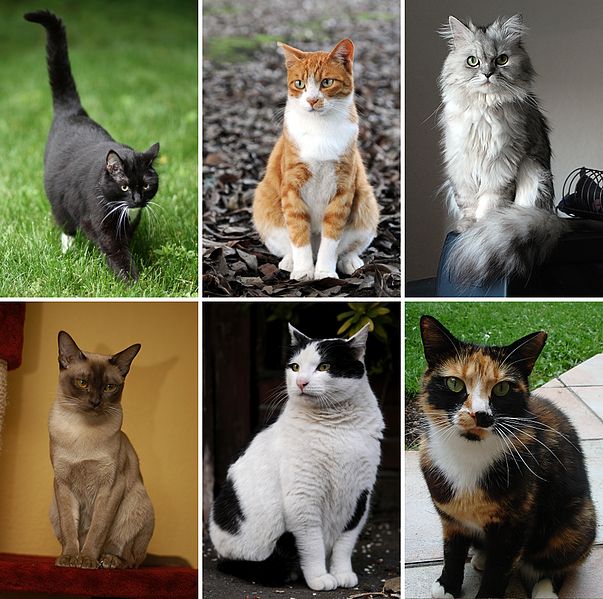 | |
| Good news, cats! Now you can stop eating songbirds! Cat collage courtesy of someone with too much time on their hands, via Wikimedia Commons |
Northern Vancouver Island may conjure images of economically depressed towns, victims of the downturn in its staple industries of fishing, logging and mining (cue the minor key and the overly concerned voice of a documentary narrator). While the north island economy is no longer ‘booming’, as it was in the 70's and 80's, many business owners have recognized new markets and are capitalizing on existing ones. Salmon opening near Metlakatla, BC, ca. 1985
 |
| To cheer you up, here's a picture of my dog eating carrots. |
As someone who has spent my entire life on the coast of British Columbia, I feel fortunate in saying that I have never experienced a tsunami. Not one. Of course, I've seen many tsunami watches and even warnings over the years. In fact one of my earliest memories is of my parents waking me up very early one morning at Kanis Island, just off the west coast of Vancouver Island, to get to higher ground as a tsunami was apparently on its way. The allotted time passed, the water remained flat and everyone went back to bed. The same scenario has played out over half a dozen times on this coast that I can remember.
This past week there were two hurricane warnings for the waters around northern Vancouver Island, indicating winds over 64 knots (118 km/h), the first of which materialized and wrought destruction along the west coast. On this side of the island, some trees were knocked down, the ferries were canceled, and the power was knocked out on Malcolm Island for a day or so. The second hurricane warning failed to materialize, but was still enough to cancel several sailings on Friday. Sandwiched in between these two dramatic weather events was a public advisory forum in Port Hardy, almost as if it were being held in the eye of the hurricane.
So as often happens this time of year, I wake up feeling like I've just inhaled half a yard of gravel through my nose. Now I know what you're thinking, "That's what Keith Richards goes through every single day". But as I as I sit here with stuffy head and no hearing in one ear, all I can think is that I'm glad that I'm not a bee. Why? Because when bees get sick, this is what happens:
Have you ever wanted to step into the exciting world of marine planning? Of course, how can you resist? The meetings, the discussion, the lengthy papers to read... Alright, so it isn't exactly a glamorous occupation. But starting this week, you can help shape the future of your coast without the day-to-day drudgery that professional marine planners endure.
So it was Tuesday morning, and I was one very excited individual. Because it was garbage day perhaps? No, though that's still rather novel here in Sointula. Because it wasn't raining? No, but also a novelty. Could it be the website material I was going to write that day? Um... not quite. No, I was excited because (for a change) I knew exactly what I would blog about that morning. |
| The place: Sointula dock on a gray day. |
 | |
| The highly technical gear and method. |
 |
| The results |


 |
This time of year is often a bit deflating. Winter has barely begun and the next couple of months promise only darkness and cold. Yet when I was growing up on the shores of the Pacific, this time of year was rivaled only by Christmas in terms of sheer excitement. The holidays might be over, but it was mere weeks until glass ball season.
 In the first few months of the year, I would eagerly await the raging south-west winds, which often heralded exotic treasures from the open sea. If these storms sustained themselves for long enough, they would begin to transport objects from the North Pacific current straight to our doorstep on the BC coast.

