Share

Share | | More

Tuesday, August 9, 2011

Video - Sea Bed Hunting on One Breath

What do you need to catch a fish at a depth of 20 meters? A boat, a rod, some tackle, maybe a beer or two? Or, if you're more adventurous, a full scuba setup and a trusty spear-gun perhaps? How about trying the spear-gun without the underwater breathing apparatus. Oh, and you can't use any weights and you must stay down (for up to five minutes) until you catch your fish.

That's crazy talk, right!?!

Well, maybe not so much. I recently watched a remarkable BBC series called the Human Planet, all of which I would highly recommend. The episode on oceans was particularly interesting to my though, particularly the segment which featured a Bajau fisherman named Sulbin who was able to accomplish the feat I just described.

Unlike the (literally) breathtaking free-diving clip that John shared with you a few months back, this is the real thing from start to finish. Enjoy, and remember: dont try this at home!

Friday, August 5, 2011

Canada Safeway takes Leadership in Ocean Advocacy

When shopping at the seafood counter of your local grocery store, it may appear that the old cliché 'plenty more fish in the sea' seems true. Reality is, two-thirds of the world's marine stocks are fully exploited, over-exploited or depleted. Healthy oceans are vital to our life on Earth. The good news is that more than likely, your local Canadian grocery store is paying attention! The currents are shifting in corporate social responsibility, with most retailers in Canada committing to a sustainable seafood policy of some type.

(Photo credit: Safeway Inc.)

The latest was last month: Canada Safeway, Western Canada's largest grocery chain, announced their Sustainable Seafood Policy, created in partnership with SeaChoice, Canada's national sustainable seafood program. At the core of Safeway's sustainable seafood policy is their commitment that by 2015, all fresh and frozen seafood will be sourced from sustainable and traceable sources, or be in a credible improvement project. Read the press release here.

Tuesday, August 2, 2011

Natters about Matters

PNCIMA. SRSLY - WTF is PNCIMA?

We spend a lot of time around here thinking about PNCIMA (pronounced pen-SEA-ma).You might be wondering what it is. I can tell you that it’s not a food group or a dance move, although 'pensema' in Esperanto means 'pensive' or 'thoughtful'. This is fitting, because the PNCIMA area gives us a lot to think about…

Think about a place…

Think about Canada's left coast. Ancient, wild, mystical...and big. Everything here is big, and PNCIMA is no exception. PNCIMA is the big ocean that stretches from northern Vancouver Island around Haida Gwaii and on to B.C.'s northern border, while washing up against the Great Bear Rainforest along the way.


Think about wildlife…

All those spirit bears in the Great Bear Rainforest? What do you think they like to eat? Salmon, that’s what. And they come from PNCIMA's waters. They're not alone, of course. Many of the Pacific's most iconic and ecologically important animals call PNCIMA home.

Friday, July 22, 2011

Haida Gwaii Slideshow

Guest Blogger Kim Wright here - reporting in from the beach (seriously - there is wi-fi out here!).

In June I was lucky enough to go to a place that’s captured my imagination for years: Haida Gwaii. This island group is truly the land of legend where a sense of magic hangs in the misty air. I got to go there in my role as representative to the conservation sector to attend meetings on ocean management for the Pacific North Coast Integrated Management Area (PNCIMA).

Planning can be pretty “meeting-hall” focused, as creating a vision for PNCIMA’s future requires hours of talk between all the interested parties. But in Haida Gwaii we were able to draw on the local environment and the past for inspiration. Early one morning we got into zodiac boats and circumnavigated Louise Island, stopping at Skedans, an abandoned Haida village site. Skedans was one of the larger Haida villages in the southern islands, but it was abandoned in the 1880s near the end of the smallpox epidemic that killed 90 percent of the Haida population. Now deer wander among the remains of mossy, mortuary poles that tell long forgotten stories from the once thriving community.


Our tour served as a reminder that humans have been part of the beauty and the bounty of these islands for many thousands of years, and that our place in these ecosystems can be extremely fragile. Skedans, also known as K'uuna Linagaay (Point Town), is now part of the Gwaii Haanas National Marine Conservation Area.

Tuesday, July 19, 2011

Scott Islands - What do they mean to you?

Of the many amazing places on the outer coast of British Columbia, there are few more spectacular this time of year than the Scott Islands. This rugged archipelago stretches out for 50 km to the northwest of Cape Scott (the northwest tip of Vancouver Island and the western terminus of the world-renown North Coast Trail), and teams with seabirds between March and September. In fact, the outer three Islands (Baresford, Sartine, and Triangle) are home to over two million auklets, murres, puffins and storm petrels.


As mentioned in the text, the land portions of these islands are already protected as provincial ecological reserves, but there is currently no protection for the surrounding waters. The Canadian Wildlife Service is currently setting up a marine National Wildlife Area in the waters around these islands to protect the rich marine environment where birds find food for themselves and for their chicks.

What the video doesn’t mention is that the rich ecosystem around the islands also supports many other bird species that don’t nest in the area, such as Marbled Murrelet (which nest in the adjacent old-growth forests), Black-footed Albatross (which have six-foot wing spans and nest in Hawaii and Japan), and Sooty Shearwater (which come from as far away as Australia and New Zealand). Many marine mammals frequent the area including Grey, Humpback, Blue and Killer, Baird’s beaked, Minke, and Sperm whales as well as Dahl’s and Harbour porpoise. The rocky islands provide a haul-out for Northern fur seal and the largest breeding colony of Steller’s sea lions in Canada (the second largest in the world).

Thursday, July 7, 2011

Elephant Seal Encounter on Hornby Island

Last week I had the unique opportunity of spending some time with a molting elephant seal. He and his kind would normally spend most of their time beneath the sea so we were lucky to see him. Able to dive to depths of 2000 metres and able to stay submerged for up to 2 hours by slowing their heart rate down, they are only rarely seen on shore. Named after the proboscis like nose of the males, elephant seals, when seen, are often mistaken for sea monsters.

Wednesday, July 6, 2011

Ocean Exposure photo contest - does that mean it's summer?

You know how, in the summer, it's so hot you feel like you're going to melt into the sidewalk and the sun is shining so brightly that you feel like your eyeballs are going to get burnt out of your head, even when they're shut? How, no matter where you look, everything is sparkling because the sun is just that brilliant? How looking at the ocean feels more like looking like looking at a field of diamonds?

Well we don't have that up here in Sointula. Currently it's foggy and gray and rainy and it's looking like it'll stay that way for while yet. (I'm hoping you're having better luck wherever you are).

But you know the worst part?! It's too gray to take any really great ocean pictures! If I wanted gray, foggy oceany pictures I would have taken them in the winter.

So we need your help! Living Oceans Society is hosting its second annual Ocean Exposures photo contest in order to get some great ocean photos. We want to show everyone how beautiful this big ball of blue is and you know what they say, a picture is worth a thousand Tufted Puffins…or words, depending on where you're from.

Your photos can fit into one of two categories: Ocean Ecosystems or Working on the Ocean. Check out last year's winner in the Ocean Ecosystem's category below.

Pretty skookum, eh?

Monday, July 4, 2011

The Case of the Missing Marine Protection – Part 3: The Dramatic Conclusion

This is a continuation of Part 1 and Part 2 of The Case of the Missing Marine Protection.

The bay was blanketed in a thick, impenetrable fog. It was as if someone had just stepped in from the rain and flung their damp wool overcoat over the small town to dry. Inside my dimly-lit office however, the fog was finally beginning to clear in the case over which I had been puzzling for the past few months.

Things just hadn't been adding up in the watery ledger of marine protection. Of the 161 marine protected areas (MPAs) on Canada's Pacific coast, 109 were meant to be completely closed to any harvesting of marine creatures, but some amount of commercial fishing seemed to be permitted in all but one. The brass who managed the MPAs didn't seem to communicate too well with the ones who ran the fisheries. The result was that the boundaries of MPAs matched up with those of the fishery closures every bit as well as any two running shoes that might randomly wash ashore on the same beach.

I stared down at the map on my desk, which highlighted this discrepancy vividly:

Suddenly, the door to my office flew open with a bang, and a large, bearded figure with a patch over his left eye burst into the room. I jumped to my feet, involuntarily reaching for the gaff I kept beside my desk.

Monday, June 27, 2011

Bubble net fever reaches a new pitch

A cool new study on bubble netting, the remarkable hunting behaviour of certain groups of humpback whales, was brought to my attention this weekend by the Marine Detective. The paper (click here for abstract) by NOAA's David Wiley describes the behaviour in detail, and breaks it down into two different classes: 'upward spiral' and the previously uncharacterized 'double loop' (no, this doesn't involve the whales doing back-flips under water).

Anyway, it makes for a very interesting description of a truly fascinating behaviour (and I'm fast running out of adjectives).

Thursday, June 23, 2011

B.C.'s corals need more protection, not more words

Not many people know about deep-sea corals. This is partly because they are in the deep sea, which is hard to visit while still remaining alive, and it's also partly because corals don't participate in televised dancing or weight-loss competitions, which if we're honest with ourselves is what you have to do to get noticed these days.

If you want that kind of information, you have to invade their privacy and film them yourself.

So, call deep-sea corals old-fashioned. They won't care. After all, it's pretty common for deep-sea coral colonies to be hundreds of years old, and the real old-timers - the black corals - can have birthday cakes with over two thousand candles on them.

Wednesday, June 22, 2011

Is increasingly complex management really the path to sustainability?

I was in a meeting recently. The subject: different approaches to ensuring that sediment kicked up by bottom fisheries doesn't harm the sponge reefs.

Someone said: we need to know exactly how much sediment the sponge reefs can withstand. We need more research on this, and then we can manage the fisheries so that that threshold amount of sedimentation isn't crossed.

Something in my mind gave way. I thought, Really? Really really?

Sure, such an approach may be great for managing impacts on the sponge reefs. There's no doubt that devoting substantial effort to gathering good scientific data, and developing sound management options from the data, is very effective when it comes to solving specific problems - in the oceans, and elsewhere.

But what is the net effect when we take this approach repeatedly, in countless different situations across the globe? What's the net effect when our default approach to problem-solving is to increase the data requirements, the management steps, the technological innovations, the sheer number of things that are necessary for our systems to function?

In short, are we truly developing a more sustainable human community when our preferred problem-solving approach is to increase the complexity of our enterprises? 

Well, no. I would argue that we're not. Not if you're looking at the long term.

Monday, June 20, 2011

Monday Mass Extinction and Coral Cams

It was bad enough that I rolled out of bed this morning to discover that it was Monday, but now we're talking about mass extinction. What gives?!?

Monday, June 13, 2011

The Case of the Missing Marine Protection – Part 2: The Facts of the Case

This is a continuation of Part 1 of The Case of the Missing Marine Protection. Click here for Part 3.

It was a quiet morning in the small coastal fishing town. The sun crept over up over the horizon, under cover of the clouds, like it had been out on the town all night and only just noticed the time. The stillness was broken only by the cry of seagulls and rumble and clanking of the ferry docking. I finished my twelfth cup of coffee of the night and stared groggily at the brown envelope bearing my name (Inspector C. Storm), the contents of which were now spilled across my desk like a purse-full of herring on the deck of a seiner.

The tinny melody of the radio echoed in my head, as I tried to piece together the facts of the case. Fact 1: there were 11 different types of Marine Protected Areas (MPAs) on the BC coast, ranging from recreational areas to ecological reserves. Fact 2: many of these areas were intended to be completely closed to harvesting of marine life, including fish. Fact 3: protected areas closed to fishing in many other parts of the world helped fish stocks to recover and produced more and larger fish. Finally, fact 4, which I had scribbled on a scrap of paper in coloured pencil:


Sunday, June 12, 2011

Trolling vs. trawling

Trolling. Trawling. Two very different ways of fishing, and yet they sound so, so similar.

Thursday, June 9, 2011

Living Oceans' GIS team takes first place in international competition

One of Living Oceans' greatest strengths is our GIS team, aka Karin Bodtker and Carrie Robb. Everybody in the organization knows this, and anyone who works with us knows this as well.

And now, the world knows it: Karin and Carrie have taken first place in the science category of the Society for Conservation GIS/ESRI/SCB International Mapping Contest!

Here's the victorious entry, which won out over some very worthy entries from around the world:

Download this map as a PDF or JPEG here

So congratulations, Karin and Carrie - this is just small amount of the recognition that you deserve!

Wednesday, June 8, 2011

And the "Way I Sea It" contest winner is...

Here it is… the moment you’ve all been waiting for, The Way I Sea It contest winner announcement… drum roll please… And the winner is…

Jodi Stark from British Columbia!

Congratulations, Jodi!

Jodi has won a Whales and Totems sailing trip of a lifetime with Maple Leaf Adventures. She’ll be sharing her experiences, as well as plenty of photos and videos, right here on this blog in September. Be sure to tune in again!

Here it is, the winning story:

Thursday, June 2, 2011

The Case of the Missing Marine Protection – Part 1: A Dark and Rainy Day

This is Part 1 of a three-part series. The Case of the Missing Marine Protection continues in Part 2 and Part 3.

The rain was pounding on the window hard enough to suggest that someone inside was late on paying their debt. But the only one in the office that cold, dark afternoon was me, Inspector C. Storm. That's the name on the door, anyway, but of course, it depends who's asking.

I turned up the scratchy radio to drown out the rain and turned my attention back to the contents of the thick brown envelope which a shadowy figure had stuffed through the slot in my door earlier that day. Inside were several maps, a salt-stained copy of Fisheries and Oceans Canada Commercial Fisheries Closures, and the following note:


Between the Harvest film

The following is a guest post from Scott Drucker, Director of the “Between the Harvest” team. This film documents the legal but controversial harvest of sea turtle eggs in Ostional, Costa Rica. The harvest itself is part of a larger conservation strategy by the Costa Rican Government intended to reduce poaching of the turtles and their eggs.

Between the Harvest” is the story of Ostional, a small coastal town that relies on a legal harvest of olive ridley sea turtle eggs. This short documentary delves into this controversial practice by viewing it through the eyes of these two fragile species. The aim of the film is to create a discussion about conservation and the legality of such a project, and to expose the threats that exist to the olive ridley sea turtle.


Tuesday, May 31, 2011

Free sailing trip. We're giving it away. Any takers? Or: sailing trips are like kittens we are giving them away.

Hey you! With the mouth full of pie! Put the fork down and listen up!

Living Oceans Society is partnering with Maple Leaf Adventures to give away a week-long tour of the Great Bear Rainforest aboard the 92-foot schooner Maple Leaf.


This is the real deal, kids - Maple Leaf Adventures is a top-notch adventure travel company and this is simply one of the most amazing places on our planet.


Monday, May 30, 2011

LOL yeah we forgot: Canada leaves tar sands emissions out of report to UN

The Canadian government has admitted that it "deliberately excluded data indicating a 20 per cent increase in pollution from Canada's oilsands" from its  greenhouse gas report to the United Nations.

I now turn the floor over to Uncle Leo for a thoughtful analysis of this news: 

Exactly, Leo. Exactly. 

Thursday, May 26, 2011

Study shows that ocean acidification poses threat to endangered northern abalone

Bad news for an icon of the B.C. coast: a new study shows that ocean acidification is a risk to the prized and endangered northern abalone.

In this study, researchers from the University of British Columbia and Simon Fraser University subjected larval abalone to seawater with varying levels of dissolved carbon dioxide and then watched, waited, and weighed. The results were not encouraging, as the larvae subjected to increased carbon dioxide displayed reduced shell growth (or, in the case of the highest dose group, sometimes didn't even grow shells at all), increased incidence of shell abnormalities, and decreased survival.

Tuesday, May 24, 2011

I am hopped up on allergy meds and this post is about a bottom trawler destroying expensive science equipment in British Columbia

What the title says is what this post is about.

I am overly fuzzy in the mental sense due to allergy meds. They are a cruel mistress. One minute you are certain that you are, indeed, the Lizard King. Then you go catatonic for long stretches, drool slowly advancing from the corner of your mouth like the adventurous appendage of some tube-dwelling deep-sea invertebrate new to science.

Now that I look at it, I may or may not have totally plagiarized that last line from Bill Bryson. Seriously, it's a possibility. I'm too tired to do anything about it. Google it yourself if you want to get me in legal trouble. 

So yes, I am probably not entirely "here" in the strictest legal interpretation of the word, but by golly when a bottom trawler destroys something I gots to report on it. So here goes.

Thursday, May 19, 2011

Is this your idea of 'organic' farmed salmon?

I'm no expert, but every time I buy organic meat, I'm wagering that the animals were treated better than the average, they were fed organic food that itself is free from toxins, and in general, the meat was produced in the most non-environmentally damaging way possible.
Looks like I'd lose my wager if I were to bet the same on organic fish.


You may remember hearing (from us) that Fisheries and Oceans Canada (DFO) is developing organic aquaculture standards - standards that would allow net-pen farmed salmon to be certified as 'organic'. Well, the second draft of Canada's proposed standards is now available (PDF copy) and it's downright shocking how much the standards contradict even the most basic organic principles.

Beachcombing meets global pollution monitoring

Those of you who've read the blog regularly over the past few months will undoubtedly have noticed that I have a thing about with plastic pollution in our oceans. It fouls the beaches, clutters the ocean, and kills a wide variety of sea life. But since it's already, well... everywhere, why not do something useful with it, Right? Such was the thinking of Dr. Hideshige Takada, who started International Pellet Watch.
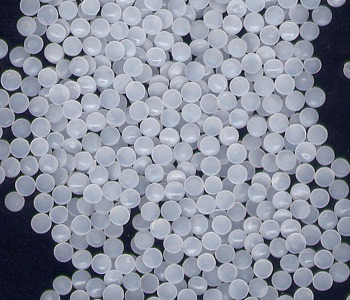
Pellets (not the ones you feed rabbits, or alternately those which rabbits produce after you feed them) are tiny plastic granules which basically act as raw material for the manufacturing industry. They are also a common sight for beachcombers, as their size and buoyancy allow them to become widely distributed across the worlds oceans.
Plastic resin pellets (credit: Plastic Reef)

Tuesday, May 17, 2011

New short film on Ocean Acidification

Plymouth Marine Laboratories (PML) in the UK just released a new short film on ocean acidification: Ocean acidification: Connecting science, industry, policy and public. The film brings together a wide range of affected individuals, from Prince Albert of Monaco to a Plymouth fish monger, and features some beautiful shots of the amazing marine life that is at risk. See for yourself:


Many thanks to Southern Fried Science for bringing this video to my attention.