Share

Share | | More

Monday, June 13, 2011

The Case of the Missing Marine Protection – Part 2: The Facts of the Case

This is a continuation of Part 1 of The Case of the Missing Marine Protection. Click here for Part 3.

It was a quiet morning in the small coastal fishing town. The sun crept over up over the horizon, under cover of the clouds, like it had been out on the town all night and only just noticed the time. The stillness was broken only by the cry of seagulls and rumble and clanking of the ferry docking. I finished my twelfth cup of coffee of the night and stared groggily at the brown envelope bearing my name (Inspector C. Storm), the contents of which were now spilled across my desk like a purse-full of herring on the deck of a seiner.

The tinny melody of the radio echoed in my head, as I tried to piece together the facts of the case. Fact 1: there were 11 different types of Marine Protected Areas (MPAs) on the BC coast, ranging from recreational areas to ecological reserves. Fact 2: many of these areas were intended to be completely closed to harvesting of marine life, including fish. Fact 3: protected areas closed to fishing in many other parts of the world helped fish stocks to recover and produced more and larger fish. Finally, fact 4, which I had scribbled on a scrap of paper in coloured pencil:


Sunday, June 12, 2011

Trolling vs. trawling

Trolling. Trawling. Two very different ways of fishing, and yet they sound so, so similar.

Thursday, June 9, 2011

Living Oceans' GIS team takes first place in international competition

One of Living Oceans' greatest strengths is our GIS team, aka Karin Bodtker and Carrie Robb. Everybody in the organization knows this, and anyone who works with us knows this as well.

And now, the world knows it: Karin and Carrie have taken first place in the science category of the Society for Conservation GIS/ESRI/SCB International Mapping Contest!

Here's the victorious entry, which won out over some very worthy entries from around the world:

Download this map as a PDF or JPEG here

So congratulations, Karin and Carrie - this is just small amount of the recognition that you deserve!

Wednesday, June 8, 2011

And the "Way I Sea It" contest winner is...

Here it is… the moment you’ve all been waiting for, The Way I Sea It contest winner announcement… drum roll please… And the winner is…

Jodi Stark from British Columbia!

Congratulations, Jodi!

Jodi has won a Whales and Totems sailing trip of a lifetime with Maple Leaf Adventures. She’ll be sharing her experiences, as well as plenty of photos and videos, right here on this blog in September. Be sure to tune in again!

Here it is, the winning story:

Thursday, June 2, 2011

The Case of the Missing Marine Protection – Part 1: A Dark and Rainy Day

This is Part 1 of a three-part series. The Case of the Missing Marine Protection continues in Part 2 and Part 3.

The rain was pounding on the window hard enough to suggest that someone inside was late on paying their debt. But the only one in the office that cold, dark afternoon was me, Inspector C. Storm. That's the name on the door, anyway, but of course, it depends who's asking.

I turned up the scratchy radio to drown out the rain and turned my attention back to the contents of the thick brown envelope which a shadowy figure had stuffed through the slot in my door earlier that day. Inside were several maps, a salt-stained copy of Fisheries and Oceans Canada Commercial Fisheries Closures, and the following note:


Between the Harvest film

The following is a guest post from Scott Drucker, Director of the “Between the Harvest” team. This film documents the legal but controversial harvest of sea turtle eggs in Ostional, Costa Rica. The harvest itself is part of a larger conservation strategy by the Costa Rican Government intended to reduce poaching of the turtles and their eggs.

Between the Harvest” is the story of Ostional, a small coastal town that relies on a legal harvest of olive ridley sea turtle eggs. This short documentary delves into this controversial practice by viewing it through the eyes of these two fragile species. The aim of the film is to create a discussion about conservation and the legality of such a project, and to expose the threats that exist to the olive ridley sea turtle.


Tuesday, May 31, 2011

Free sailing trip. We're giving it away. Any takers? Or: sailing trips are like kittens we are giving them away.

Hey you! With the mouth full of pie! Put the fork down and listen up!

Living Oceans Society is partnering with Maple Leaf Adventures to give away a week-long tour of the Great Bear Rainforest aboard the 92-foot schooner Maple Leaf.


This is the real deal, kids - Maple Leaf Adventures is a top-notch adventure travel company and this is simply one of the most amazing places on our planet.


Monday, May 30, 2011

LOL yeah we forgot: Canada leaves tar sands emissions out of report to UN

The Canadian government has admitted that it "deliberately excluded data indicating a 20 per cent increase in pollution from Canada's oilsands" from its  greenhouse gas report to the United Nations.

I now turn the floor over to Uncle Leo for a thoughtful analysis of this news: 

Exactly, Leo. Exactly. 

Thursday, May 26, 2011

Study shows that ocean acidification poses threat to endangered northern abalone

Bad news for an icon of the B.C. coast: a new study shows that ocean acidification is a risk to the prized and endangered northern abalone.

In this study, researchers from the University of British Columbia and Simon Fraser University subjected larval abalone to seawater with varying levels of dissolved carbon dioxide and then watched, waited, and weighed. The results were not encouraging, as the larvae subjected to increased carbon dioxide displayed reduced shell growth (or, in the case of the highest dose group, sometimes didn't even grow shells at all), increased incidence of shell abnormalities, and decreased survival.

Tuesday, May 24, 2011

I am hopped up on allergy meds and this post is about a bottom trawler destroying expensive science equipment in British Columbia

What the title says is what this post is about.

I am overly fuzzy in the mental sense due to allergy meds. They are a cruel mistress. One minute you are certain that you are, indeed, the Lizard King. Then you go catatonic for long stretches, drool slowly advancing from the corner of your mouth like the adventurous appendage of some tube-dwelling deep-sea invertebrate new to science.

Now that I look at it, I may or may not have totally plagiarized that last line from Bill Bryson. Seriously, it's a possibility. I'm too tired to do anything about it. Google it yourself if you want to get me in legal trouble. 

So yes, I am probably not entirely "here" in the strictest legal interpretation of the word, but by golly when a bottom trawler destroys something I gots to report on it. So here goes.

Thursday, May 19, 2011

Is this your idea of 'organic' farmed salmon?

I'm no expert, but every time I buy organic meat, I'm wagering that the animals were treated better than the average, they were fed organic food that itself is free from toxins, and in general, the meat was produced in the most non-environmentally damaging way possible.
Looks like I'd lose my wager if I were to bet the same on organic fish.


You may remember hearing (from us) that Fisheries and Oceans Canada (DFO) is developing organic aquaculture standards - standards that would allow net-pen farmed salmon to be certified as 'organic'. Well, the second draft of Canada's proposed standards is now available (PDF copy) and it's downright shocking how much the standards contradict even the most basic organic principles.

Beachcombing meets global pollution monitoring

Those of you who've read the blog regularly over the past few months will undoubtedly have noticed that I have a thing about with plastic pollution in our oceans. It fouls the beaches, clutters the ocean, and kills a wide variety of sea life. But since it's already, well... everywhere, why not do something useful with it, Right? Such was the thinking of Dr. Hideshige Takada, who started International Pellet Watch.
Pellets (not the ones you feed rabbits, or alternately those which rabbits produce after you feed them) are tiny plastic granules which basically act as raw material for the manufacturing industry. They are also a common sight for beachcombers, as their size and buoyancy allow them to become widely distributed across the worlds oceans.
Plastic resin pellets (credit: Plastic Reef)

Tuesday, May 17, 2011

New short film on Ocean Acidification

Plymouth Marine Laboratories (PML) in the UK just released a new short film on ocean acidification: Ocean acidification: Connecting science, industry, policy and public. The film brings together a wide range of affected individuals, from Prince Albert of Monaco to a Plymouth fish monger, and features some beautiful shots of the amazing marine life that is at risk. See for yourself:


Many thanks to Southern Fried Science for bringing this video to my attention.

Monday, May 16, 2011

The things we can learn from Cuttlefish and Whaling

Ever wished you could blend in with your surroundings? It's incredibly useful for avoiding predators, sneaking up on unsuspecting prey and forestalling that guy who always wants to start awkward conversations (you know the one). There are many fine examples of this ability in vertebrates and invertebrates alike, but none are quite as sophisticated as the cuttlefish. Here's what I mean by that:


So sophisticated, in fact, that researchers at the Marine Biology Laboratory at Woods Hole recently received a $6 million grant from the US Navy to study these cephalopods in greater detail. The ultimate goal of this research is to emulate the system which allows the cuttlefish to mimic the colour and texture of their environment, and develop some nifty new materials for stealth suits and such.

Such forms of camouflage would also have come in handy for shareholders entering the Enbridge Pipeline offices in Calgary last week, as members of the Yinka Dene Alliance held a protest and drum ceremony in front of the building. First Nations along the proposed Northern Gateway pipeline route have consistently voiced their opposition to the project because of the substantial environmental risks it poses to their territories. How much risk? Try 5000 spills in Alberta alone between 1990 and 2005, 52 of which were greater than 100,000 liters. Not to mention the massive spills this in Northern Alberta this month, and in the Kalamazoo River last year.

And what has this to do with the ocean (being that this is a blog about marine conservation and all)? Well for one, increased tanker traffic on the coast (as a result of the proposed Northern Gateway pipeline) would create the potential for an environmental disaster orders of magnitude larger than those caused by pipeline ruptures and much more difficult to clean up.

But in a more fundamental sense, many parallels can be drawn between the development (and potential fate) of the modern oil industry and that (those) of the whaling industry of the last century, according to an insightful piece by Andrew Nikiforuk in the Tyee last week. Not only are there parallels, but the oil industry basically sprung out of the demand for energy created by the whaling industry. To illustrate this transition, I'll leave you with a classic Stan Rogers tune.

Friday, May 13, 2011

PNCIMA for Dummies (like me)

At my job interview for my current position at Living Oceans Society, I was asked if I was “familiar with PNCIMA.” As my eyes furiously glanced around the room in hopes that one of the posters on the walls might give me some tiny gleam of understanding, I realized that my window of opportunity to feign knowledge had abruptly ended. I replied in the negative. Thankfully, I was forgiven.

Now for all you accountants, bus drivers, lawyers or store clerks out there, you probably wouldn’t be asked this question in a job interview. But, on the off chance that you are, it’s probably a good idea to come up with an answer, just in case.

PNCIMA (pen-SEE-ma) – not the sound you make when you sneeze, not a skin disease, not a foreign language greeting. It’s actually a place. The Pacific North Coast Integrated Management Area (least sexy location name ever created? Prove me wrong). For all you British Columbians out there, it makes up approximately half of our coastline.

Tuesday, May 10, 2011

Get inspired, write about it, sail away

You know what I find inspiring? You thought I was going to say David Suzuki, didn't you? While I certainly do, David would be a 'who', not a 'what' (ah... grammar). Other inspiring things to which I am not referring here include:
  • Sooty shearwaters which can fly over 64,000 km from the southern to the northern hemisphere and back in during their migration each year;
  • Cuvier's beaked whales which can dive to depths of up to 2000 meters (6500 feet);
  • And Spanish dancers (nudibranchs, that is) which are just dang cool!
But what I had in mind when I started writing this post is much greater and more awe inspiring. In broad terms, it's the night sky. More specifically, the Milky Way Galaxy (do we have any one from the Milky Way here tonight? Raise your hand). Very specifically, this video of the Milky Way, taken during a sandstorm on Pico del Teide:


I've always found that the stars are best viewed from the deck of a ship out at sea (though I may change my mind if I ever have the chance to visit the Canary Islands), so I'm excited to tell you about a contest currently under way that could put your feet on such a deck. Namely, the Way I Sea It contest.

Why am I excited to tell you about this? Because the prize is a seven-day Whales and Totems Tour of the Great Bear Rainforest with Maple Leaf Adventures along British Columbia’s coast from August 28 to September 3, 2011. This adventure by sail on the 95-ton schooner Maple Leaf with her gourmet chef and welcoming crew, features personal guides, whale watching, sailing, and hiking in and around the over 200 islands of the Broughton Archipelago.

But that's not the most exciting part. The lucky winner will also have the opportunity to write a few guest posts for our very own Water Blogged. That's right, you could be featured on the very blog you're currently reading! I told you it was exciting, didn't I?Of course, I would be much more excited about the awesome sailing adventure, but it turns out that I can't apply (staff ineligibility, something-or-other). So It's all up to you now. All you have to do is click here, and follow the instructions. Want to read the instructions first? Simply write an answer to the following question in 300 words or less:
What opportunities, decisions, serendipity, adventures or choices led you to your current path? The way you make a difference in the world could be anything, big or small - a hobby, a career, a volunteer activity, a way of life, a philosophy.

Then, increase your chances of winning simply by asking people to vote for you. Judges (no, I’m not one of them) will pick the winner from the top 5 contestants with the most votes. The winner also get to blog (read, brag) about their trip for Living Oceans’ blog. The sooner you get your entry up, the more time you will have to get more votes, so enter now!

There are already a number of great entries, which you can check out here. If you don't feel like entering, than you can vote for your favorite (did I mention I don't get to vote either?). So check it out, and you or someone you know could be sailing off into the sunset this summer.

I'll wave at you from my office.

Now here's the fine print (I may have added a few conditions):

No purchase necessary. Residents of Canada excluding Quebec are eligible to enter. Must be a resident of the Milky Way Galaxy to enter. The one prize is a trip for one from Vancouver to Port McNeil with Maple Leaf Adventures and worth approximately $3,875, and the opportunity to write two to five blog posts for the Living Oceans Society. LOS reserves the right to refuse to publish any material pertaining to Justin Bieber in any way shape or form. To enter, contestants must clearly write a short story and be one of the five contestants to get the most votes. Contestants who owe John money are ineligible. Judges will choose one contest winner from the five contestants with the most votes. The contest closes on June 5, 2011.

Friday, May 6, 2011

Meanwhile, in the Octopus's Garden...

Evolution can stop now. It has achieved its purpose. It is impossible to ever make anything more endearing than this.

(Image via this article in The New Yorker).

Wednesday, May 4, 2011

The more things change...

Well, a couple of days have passed since the 'exciting' election on Monday, and the buzz is finally wearing off. While Canada woke up Tuesday to the same government as before, we have a brand new opposition and have finally joined most other industrialized democracies in the world (with apologies here to the United States) in electing a Green Party member to Parliament. I would love to talk about what all this will mean for the environment, but others have already covered this both here in terms of climate, and here in more general terms. Heed the bottom line in both these accounts; the environment, the climate and the ocean need your help more than ever. Stay engaged, dear readers, and above all (in the words of my favorite science fiction author):

-Douglas Adams, author and environmentalist, 1952-2001

Monday, May 2, 2011

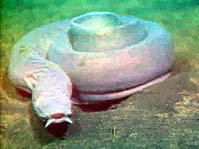
Overlooked Species Theatre presents: Hagfish

Consider the hagfish.

But do so from a distance. Or at the very least, wear gloves.

Also, don't imagine it burrowing into your chest cavity to feed on your decomposing flesh. That's what it does to the corpses of dead marine life, of course, but...just don't think about it, OK?

If you have access to medications that quell feelings of nausea and/or panic, take those too.

Image: Wikimedia Commons.

Wednesday, April 27, 2011

What Enbridge’s Oil Spill Response Plan (Doesn’t) Tell Us

With the election mere days away and oil tankers shaping up to be a major voting issue in B.C., it’s surprising that the Conservative party still supports introducing crude oil tankers to B.C.’s North Coast and Enbridge’s extremely controversial Northern Gateway project.

We found yet another reason why the Conservatives might want to rethink their position.


Well, it might not be quite that dramatic, but it's still pretty scary. Enbridge recently released their General Oil Spill Response Plan (GOSRP) for the Northern Gateway Project. Unfortunately, the plan is like an extended warranty – not worth the paper it’s written on. It’s thick on words. Thin on actions.

Witty Title Goes Here

Well, that was quite the hiatus.

Why has Water Blogged been silent these past two weeks? Well, I got a bad haircut. Obviously blogging was out of the question until it grew out.

Jake wasn't available because he heard a scary noise outside of his house one night and refused to come out of his bedroom for nearly a week afterward.

But to paraphrase James Brown: We're back. We're back. We're back. We're back. We're back. And we're here to remind you that there are things going on outside of the election and the NHL playoffs.


Wednesday, April 13, 2011

U.S. Military: Climate Saviour?

I'm an American living in Canada. How'd that happen? Well, I was living in Maine, and one day I was really hungry. I smelled maple syrup, and I just kept following it.

It could happen to anyone.

Tuesday, April 12, 2011

Over 770 letters on behalf of sharks and turtles! Way to go!

Last week we asked you to send a letter to the CEO of Marine Stewardship Council and to Moody Marine Ltd. to express your concerns regarding potential MSC certification of the Canadian longline swordfish fishery.

Well, the public comment period ended yesterday, but they sure got an earful! Thanks to the efforts of hundreds of concerned individuals like you, over 770 letters were sent.

Thanks, friends! By the way...would you happen
to have any squid on you, perchance?

Sunday, April 10, 2011

From Japan With Love, and possibly some radiation

Those who live on the west coast of North America are no strangers to marine debris from Japan washing up on our doorstep. From barnacle-coated trash to coveted glass fishing floats, oriental flotsam gathers on our shores every spring. In 2014 though, beachcombers can likely expect a glut of debris specifically set adrift by the devastating tsunami which hit Japan on March 11th. This according to a model by researchers at the University of Hawaii (below).

Friday, April 8, 2011

Tell MSC that a fishery that catches 100,000+ sharks and hundreds of sea turtles is not 'sustainable'

A fishery notorious for its bycatch of sharks and sea turtles is close to snagging something they actually want: a coveted eco-label from the Marine Stewardship Council.

The Atlantic Canada longline swordfish fishery - aka the "fishery for unwanted sharks mostly, and sometimes swordfish, and all too often turtles" - has been recommended for MSC certification by Moody Marine Ltd., a company that conducts assessments for the MSC process.

All is not yet lost, though: the public comment period is open until April 11, and this is your chance to make your voice heard. Your effort can have a real, positive impact for sea turtles and sharks in Atlantic Canada.