Share

Share | | More

Monday, May 16, 2011

The things we can learn from Cuttlefish and Whaling

Ever wished you could blend in with your surroundings? It's incredibly useful for avoiding predators, sneaking up on unsuspecting prey and forestalling that guy who always wants to start awkward conversations (you know the one). There are many fine examples of this ability in vertebrates and invertebrates alike, but none are quite as sophisticated as the cuttlefish. Here's what I mean by that:


So sophisticated, in fact, that researchers at the Marine Biology Laboratory at Woods Hole recently received a $6 million grant from the US Navy to study these cephalopods in greater detail. The ultimate goal of this research is to emulate the system which allows the cuttlefish to mimic the colour and texture of their environment, and develop some nifty new materials for stealth suits and such.

Such forms of camouflage would also have come in handy for shareholders entering the Enbridge Pipeline offices in Calgary last week, as members of the Yinka Dene Alliance held a protest and drum ceremony in front of the building. First Nations along the proposed Northern Gateway pipeline route have consistently voiced their opposition to the project because of the substantial environmental risks it poses to their territories. How much risk? Try 5000 spills in Alberta alone between 1990 and 2005, 52 of which were greater than 100,000 liters. Not to mention the massive spills this in Northern Alberta this month, and in the Kalamazoo River last year.

And what has this to do with the ocean (being that this is a blog about marine conservation and all)? Well for one, increased tanker traffic on the coast (as a result of the proposed Northern Gateway pipeline) would create the potential for an environmental disaster orders of magnitude larger than those caused by pipeline ruptures and much more difficult to clean up.

But in a more fundamental sense, many parallels can be drawn between the development (and potential fate) of the modern oil industry and that (those) of the whaling industry of the last century, according to an insightful piece by Andrew Nikiforuk in the Tyee last week. Not only are there parallels, but the oil industry basically sprung out of the demand for energy created by the whaling industry. To illustrate this transition, I'll leave you with a classic Stan Rogers tune.

Friday, May 13, 2011

PNCIMA for Dummies (like me)

At my job interview for my current position at Living Oceans Society, I was asked if I was “familiar with PNCIMA.” As my eyes furiously glanced around the room in hopes that one of the posters on the walls might give me some tiny gleam of understanding, I realized that my window of opportunity to feign knowledge had abruptly ended. I replied in the negative. Thankfully, I was forgiven.

Now for all you accountants, bus drivers, lawyers or store clerks out there, you probably wouldn’t be asked this question in a job interview. But, on the off chance that you are, it’s probably a good idea to come up with an answer, just in case.

PNCIMA (pen-SEE-ma) – not the sound you make when you sneeze, not a skin disease, not a foreign language greeting. It’s actually a place. The Pacific North Coast Integrated Management Area (least sexy location name ever created? Prove me wrong). For all you British Columbians out there, it makes up approximately half of our coastline.

Tuesday, May 10, 2011

Get inspired, write about it, sail away

You know what I find inspiring? You thought I was going to say David Suzuki, didn't you? While I certainly do, David would be a 'who', not a 'what' (ah... grammar). Other inspiring things to which I am not referring here include:
  • Sooty shearwaters which can fly over 64,000 km from the southern to the northern hemisphere and back in during their migration each year;
  • Cuvier's beaked whales which can dive to depths of up to 2000 meters (6500 feet);
  • And Spanish dancers (nudibranchs, that is) which are just dang cool!
But what I had in mind when I started writing this post is much greater and more awe inspiring. In broad terms, it's the night sky. More specifically, the Milky Way Galaxy (do we have any one from the Milky Way here tonight? Raise your hand). Very specifically, this video of the Milky Way, taken during a sandstorm on Pico del Teide:


I've always found that the stars are best viewed from the deck of a ship out at sea (though I may change my mind if I ever have the chance to visit the Canary Islands), so I'm excited to tell you about a contest currently under way that could put your feet on such a deck. Namely, the Way I Sea It contest.

Why am I excited to tell you about this? Because the prize is a seven-day Whales and Totems Tour of the Great Bear Rainforest with Maple Leaf Adventures along British Columbia’s coast from August 28 to September 3, 2011. This adventure by sail on the 95-ton schooner Maple Leaf with her gourmet chef and welcoming crew, features personal guides, whale watching, sailing, and hiking in and around the over 200 islands of the Broughton Archipelago.

But that's not the most exciting part. The lucky winner will also have the opportunity to write a few guest posts for our very own Water Blogged. That's right, you could be featured on the very blog you're currently reading! I told you it was exciting, didn't I?Of course, I would be much more excited about the awesome sailing adventure, but it turns out that I can't apply (staff ineligibility, something-or-other). So It's all up to you now. All you have to do is click here, and follow the instructions. Want to read the instructions first? Simply write an answer to the following question in 300 words or less:
What opportunities, decisions, serendipity, adventures or choices led you to your current path? The way you make a difference in the world could be anything, big or small - a hobby, a career, a volunteer activity, a way of life, a philosophy.

Then, increase your chances of winning simply by asking people to vote for you. Judges (no, I’m not one of them) will pick the winner from the top 5 contestants with the most votes. The winner also get to blog (read, brag) about their trip for Living Oceans’ blog. The sooner you get your entry up, the more time you will have to get more votes, so enter now!

There are already a number of great entries, which you can check out here. If you don't feel like entering, than you can vote for your favorite (did I mention I don't get to vote either?). So check it out, and you or someone you know could be sailing off into the sunset this summer.

I'll wave at you from my office.

Now here's the fine print (I may have added a few conditions):

No purchase necessary. Residents of Canada excluding Quebec are eligible to enter. Must be a resident of the Milky Way Galaxy to enter. The one prize is a trip for one from Vancouver to Port McNeil with Maple Leaf Adventures and worth approximately $3,875, and the opportunity to write two to five blog posts for the Living Oceans Society. LOS reserves the right to refuse to publish any material pertaining to Justin Bieber in any way shape or form. To enter, contestants must clearly write a short story and be one of the five contestants to get the most votes. Contestants who owe John money are ineligible. Judges will choose one contest winner from the five contestants with the most votes. The contest closes on June 5, 2011.

Friday, May 6, 2011

Meanwhile, in the Octopus's Garden...

Evolution can stop now. It has achieved its purpose. It is impossible to ever make anything more endearing than this.

(Image via this article in The New Yorker).

Wednesday, May 4, 2011

The more things change...

Well, a couple of days have passed since the 'exciting' election on Monday, and the buzz is finally wearing off. While Canada woke up Tuesday to the same government as before, we have a brand new opposition and have finally joined most other industrialized democracies in the world (with apologies here to the United States) in electing a Green Party member to Parliament. I would love to talk about what all this will mean for the environment, but others have already covered this both here in terms of climate, and here in more general terms. Heed the bottom line in both these accounts; the environment, the climate and the ocean need your help more than ever. Stay engaged, dear readers, and above all (in the words of my favorite science fiction author):

-Douglas Adams, author and environmentalist, 1952-2001

Monday, May 2, 2011

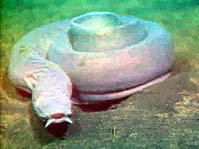
Overlooked Species Theatre presents: Hagfish

Consider the hagfish.

But do so from a distance. Or at the very least, wear gloves.

Also, don't imagine it burrowing into your chest cavity to feed on your decomposing flesh. That's what it does to the corpses of dead marine life, of course, but...just don't think about it, OK?

If you have access to medications that quell feelings of nausea and/or panic, take those too.

Image: Wikimedia Commons.

Wednesday, April 27, 2011

What Enbridge’s Oil Spill Response Plan (Doesn’t) Tell Us

With the election mere days away and oil tankers shaping up to be a major voting issue in B.C., it’s surprising that the Conservative party still supports introducing crude oil tankers to B.C.’s North Coast and Enbridge’s extremely controversial Northern Gateway project.

We found yet another reason why the Conservatives might want to rethink their position.


Well, it might not be quite that dramatic, but it's still pretty scary. Enbridge recently released their General Oil Spill Response Plan (GOSRP) for the Northern Gateway Project. Unfortunately, the plan is like an extended warranty – not worth the paper it’s written on. It’s thick on words. Thin on actions.

Witty Title Goes Here

Well, that was quite the hiatus.

Why has Water Blogged been silent these past two weeks? Well, I got a bad haircut. Obviously blogging was out of the question until it grew out.

Jake wasn't available because he heard a scary noise outside of his house one night and refused to come out of his bedroom for nearly a week afterward.

But to paraphrase James Brown: We're back. We're back. We're back. We're back. We're back. And we're here to remind you that there are things going on outside of the election and the NHL playoffs.


Wednesday, April 13, 2011

U.S. Military: Climate Saviour?

I'm an American living in Canada. How'd that happen? Well, I was living in Maine, and one day I was really hungry. I smelled maple syrup, and I just kept following it.

It could happen to anyone.

Tuesday, April 12, 2011

Over 770 letters on behalf of sharks and turtles! Way to go!

Last week we asked you to send a letter to the CEO of Marine Stewardship Council and to Moody Marine Ltd. to express your concerns regarding potential MSC certification of the Canadian longline swordfish fishery.

Well, the public comment period ended yesterday, but they sure got an earful! Thanks to the efforts of hundreds of concerned individuals like you, over 770 letters were sent.

Thanks, friends! By the way...would you happen
to have any squid on you, perchance?

Sunday, April 10, 2011

From Japan With Love, and possibly some radiation

Those who live on the west coast of North America are no strangers to marine debris from Japan washing up on our doorstep. From barnacle-coated trash to coveted glass fishing floats, oriental flotsam gathers on our shores every spring. In 2014 though, beachcombers can likely expect a glut of debris specifically set adrift by the devastating tsunami which hit Japan on March 11th. This according to a model by researchers at the University of Hawaii (below).

Friday, April 8, 2011

Tell MSC that a fishery that catches 100,000+ sharks and hundreds of sea turtles is not 'sustainable'

A fishery notorious for its bycatch of sharks and sea turtles is close to snagging something they actually want: a coveted eco-label from the Marine Stewardship Council.

The Atlantic Canada longline swordfish fishery - aka the "fishery for unwanted sharks mostly, and sometimes swordfish, and all too often turtles" - has been recommended for MSC certification by Moody Marine Ltd., a company that conducts assessments for the MSC process.

All is not yet lost, though: the public comment period is open until April 11, and this is your chance to make your voice heard. Your effort can have a real, positive impact for sea turtles and sharks in Atlantic Canada.

Tuesday, April 5, 2011

Our fashion advice for this spring? Skip the stingray 'leather'

This weekend, Living Oceans Society found itself in uncharted waters: giving advice on fashion trends in the Fashion and Beauty section of a major newspaper.

Check it out: there we are in the Globe and Mail, right alongside supermodels, world-famous designers, and other sorts who wouldn't associate with us in the real world.

Such as this designer, who is shown
viewing our staff photo


Friday, April 1, 2011

Plastification of our seas

Plastic... where to begin? Call me Ishmael? No, that's been done before. Given the size of the problem though, it seems only fitting to make leviathan references. Instead, I'll start at what is clearly the logical starting point for such a discussion: a picture of a sea turtle.
Green sea turtle - chilling out in the weeds (Photo: greenpacks.org)

 A green sea turtle, to be precise. This turtle was recently in the news when an examination of a juvenile captured off Argentina revealed it had a belly full of plastic debris. This is a common problem for sea turtles as outlined in a Marine Turtle Newsletter editorial. Young turtles often find themselves in the same places as floating plastic debris, and being indiscriminate eaters, they scarf down large quantities this garbage (real garbage, that is, not the kind John eats while he's blogging). Between their high-plastic diet and entanglement in abandoned fishing gear, marine debris can lead to young turtles' untimely demise.

Wednesday, March 30, 2011

What do three sablefish do over the course of 20 years? Grow a few inches, move around a bit...probably go bowling a few times

This is pretty cool:

From the Southwest Fisheries Science Center, we learn that fishermen on the U.S. west coast have recently caught several sablefish (aka black cod) that were tagged years ago in a now-defunct tagging program. Each of the three sablefish in question was first tagged over 20 years ago. Two were recovered more than 500 miles from the point of tagging,  but the third was found less than 15 miles from its tagging location.

Monday, March 28, 2011

MSC label on cat food: I can haz sustainable fisheries?

This just happened

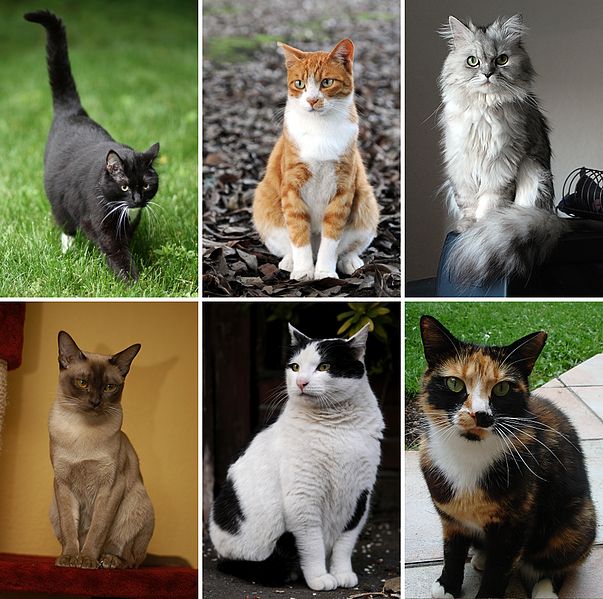
Mars Petcare, makers of legendary cat foods Whiskas and Sheba (which Jake assures me are both equally delicious), recently announced that some types of their catfoods in certain European countries will now bear the mark of the Marine Stewardship Council.


Good news, cats! Now you can stop eating songbirds!
Cat collage courtesy of someone with too much time on their hands, via Wikimedia Commons


Wednesday, March 23, 2011

The strangely touching case of the brittle star and the coral, or: why I was crying at my desk yesterday

There are a lot of things that touch your heart and in doing so generate warm feelings and misty eyes. Puppies. Old faded photographs (especially if they are of puppies). Old videos of Puppy Bowl. And so on.

You know what's not on that list? Brittle stars. For the vast majority of humanity, brittle stars score a perfect zero on the emote-o-scale. An average person sees a brittle star, and they think "I don't care". They may even say it out loud.

Tuesday, March 22, 2011

Canadian tar sands meet American politics

Top o' the early afternoon to ye, ye wee fragile laddies and lasses o' the internet.

Have you been following the Tyee's excellent series on the hydra-headed, multi-national political beast that serves the interests of the Alberta tar sands? It's a must-read.

If you haven't been following along, today's a good day to jump in - the subject is the ties between the Canadian tar sands and the Koch brothers, the obscenely wealthy and enormously powerful American industrialists whose billions support a network of arch-conservative operations and operatives in the States.

Friday, March 18, 2011

The Marine Economy and Beyond

Northern Vancouver Island may conjure images of economically depressed towns, victims of the downturn in its staple industries of fishing, logging and mining (cue the minor key and the overly concerned voice of a documentary narrator). While the north island economy is no longer ‘booming’, as it was in the 70's and 80's, many business owners have recognized new markets and are capitalizing on existing ones.

Salmon opening near Metlakatla, BC, ca. 1985
Just a couple of weeks back, the Vancouver Sun ran a story on the 'sheer tenacity' of local Port Hardy business Keltic Seafoods ltd. Former employees of the Maple Leaf Foods processing plant took the place over after the company shut down its operation in 1999. Today, the plant supports up to 200 workers and creates even more employment for its suppliers.

There are many such success stories in the marine sector of the north island. In fact, the marine economy of the region is now quite diverse, according to a joint study by Living Oceans Society and the Regional District of Mount Waddington. The study looked at wages, benefits and employment of local residents from ocean-related businesses in the region. In all, almost 30 % of local employment could be linked to the ocean in 2009 (the study year), and that portion would likely be much greater after last year's spectacular sockeye run. If you'd like the details, final report of the study can be downloaded can be downloaded here.

Friday Links - 98.5% Charlie Sheen-free

Hey, it's Friday! Got big plans for tonight?

No? You're going to sit at home with Blood on the Tracks on repeat, eating an entire block of Velveeta while thinking over all of the mistakes you've made?

Tough break. If you get tired of that, here's some stuff to read, I guess.

To cheer you up, here's a picture of my dog eating carrots.

Monday, March 14, 2011

Would you like some Oil with your Pi?

Happy Pi Day! That's right, today (March 14, or 3.14) is the 22nd annual day of celebration of the notorious mathematical constant here in geekdom. It is usually marked by eating pie (the homophone of pi) and generally sharing terrible mathematical puns. NewScientist offers a musical take on the ratio of honour, by translating the digits of pi into notes and chords with surprisingly melodious results.

Friday, March 11, 2011

Waiting for Tsunamis

As someone who has spent my entire life on the coast of British Columbia, I feel fortunate in saying that I have never experienced a tsunami. Not one. Of course, I've seen many tsunami watches and even warnings over the years. In fact one of my earliest memories is of my parents waking me up very early one morning at Kanis Island, just off the west coast of Vancouver Island, to get to higher ground as a tsunami was apparently on its way. The allotted time passed, the water remained flat and everyone went back to bed. The same scenario has played out over half a dozen times on this coast that I can remember.

Wednesday, March 9, 2011

Hurricanes, marine planning, and public fora

This past week there were two hurricane warnings for the waters around northern Vancouver Island, indicating winds over 64 knots (118 km/h), the first of which materialized and wrought destruction along the west coast. On this side of the island, some trees were knocked down, the ferries were canceled, and the power was knocked out on Malcolm Island for a day or so. The second hurricane warning failed to materialize, but was still enough to cancel several sailings on Friday. Sandwiched in between these two dramatic weather events was a public advisory forum in Port Hardy, almost as if it were being held in the eye of the hurricane.

Wednesday, March 2, 2011

Crazy freediving clip. Do not try this at home. Or anywhere. Ever.

This has been making the rounds for quite some time, so you may have already seen it. What "it" is, is a stunning short film showing world champion freediver Guillaume Nery apparently freediving to the bottom of a massive hole in the seafloor. 

My response when I saw this for the first time a few months ago went pretty much like this: screaming ARE YOU KIDDING ME and gasping for air even though I was sitting on my landlubbing posterior, safe and sound - and dry - at home.

My second response was to google the hell out of it. And, as is made obvious by the people who created the movie, it is fiction - the subject and the camera operator are both champion freedivers, but the 'dive' in the video was, as I understand, composed of several different dives spliced together. The makers of the movie never suggested it was anything else than that, either.

But, you know what? It doesn't matter. It's an amazing clip. Here's the deal: I'll stop writing, and you watch it. Deal? Deal.

Tuesday, March 1, 2011

Sick Bees, Pesticides, and the Fate of Ocean

So as often happens this time of year, I wake up feeling like I've just inhaled half a yard of gravel through my nose. Now I know what you're thinking, "That's what Keith Richards goes through every single day". But as I as I sit here with stuffy head and no hearing in one ear, all I can think is that I'm glad that I'm not a bee. Why? Because when bees get sick, this is what happens: